

Well… we did it. Five steps. Five sessions. A lot of “wait, this is actually how it works?” moments.
When we kicked off the Moments-Based Marketing series, we didn’t set out to create another framework. We wanted real conversations about what modern marketing actually looks like when it’s working.
Turns out? It’s less about campaigns. And more about systems that power moments.
We started with data, and ended with revenue.
And somewhere in between, we rebuilt how modern marketing operates.
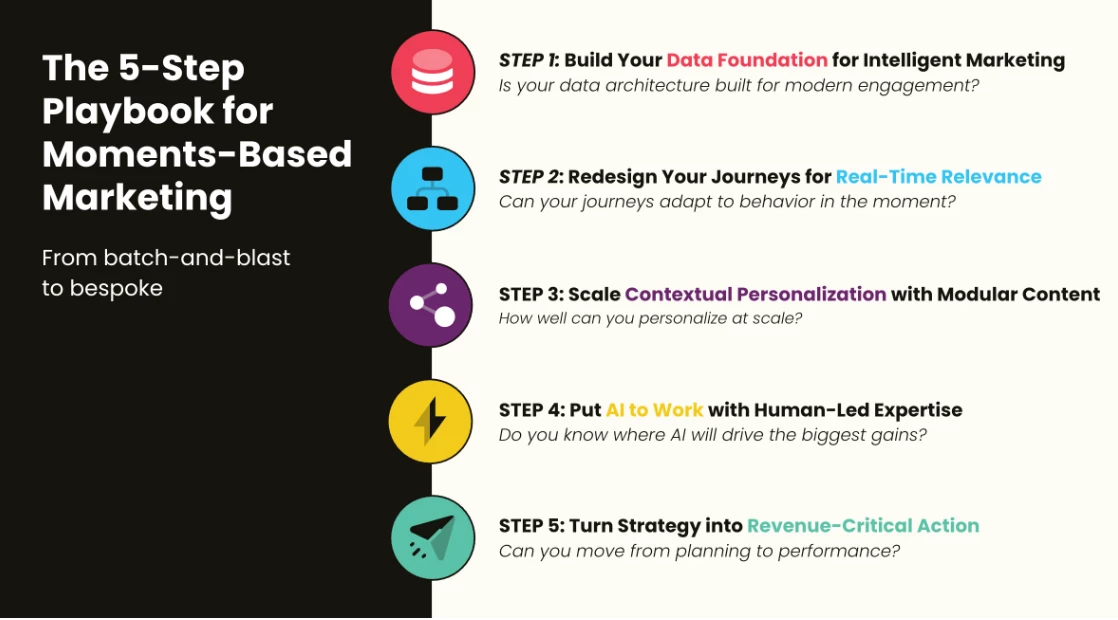
Here’s what that journey looked like:
- Step 1 gave us the data.
- Step 2 rebuilt the system.
- Step 3 made it personal.
- Step 4 made it intelligent.
- Step 5 made it measurable.
If you joined us live, you know the conversations went deep.
If you missed a step? Don’t worry. We’ve got you.
Here’s how the five pieces connect — and why they matter more together than apart.
Step 1: Build Your Data Foundation
Move data. Move customers.
WHOOP showed what’s possible when data is easy to access and activate. With a composable stack, they enabled same-day activation and true self-serve marketing.
No waiting on analytics teams.
No lag between insight and execution.
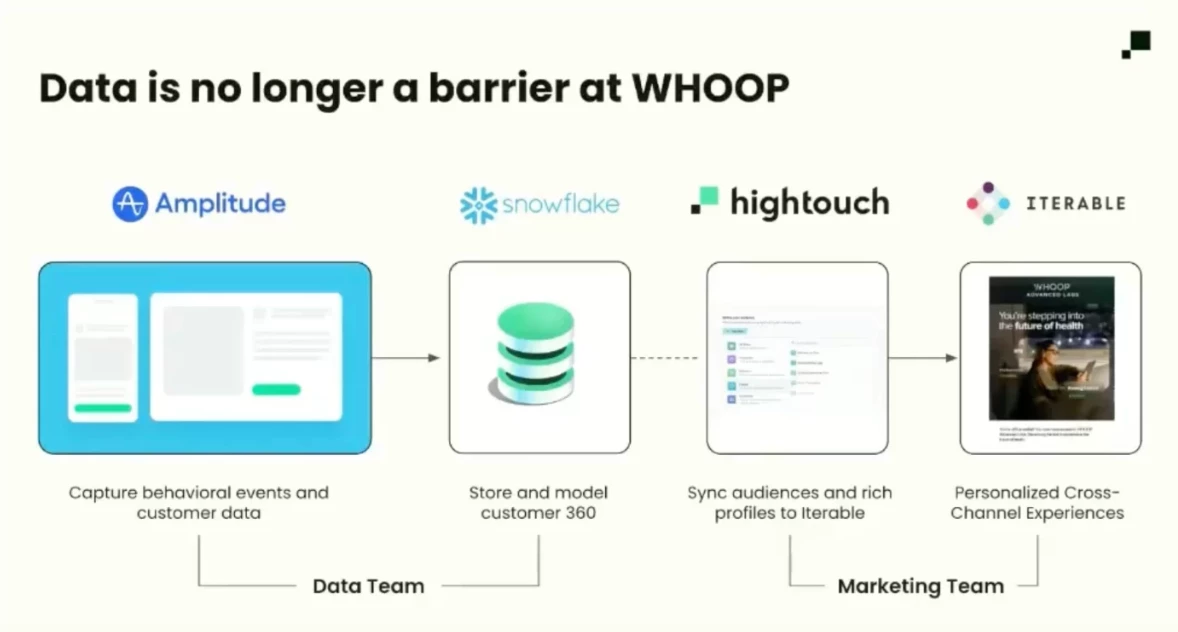
“Removing analytics lead time unlocked complex segmentation and more precise personalization.”
— Aoife O'Driscoll, WHOOP
When data flows, marketing moves faster. Simple as that.
- 🎥 Watch the replay
- 📖 Read the recap →
Step 2: Redesign Your Journeys
Static workflows are officially outdated.
ATG Entertainment and Ragnarok proved that journeys work best when they adapt in real time — not when they’re constantly rebuilt.
The goal? Journeys that feel natural, not mechanical.
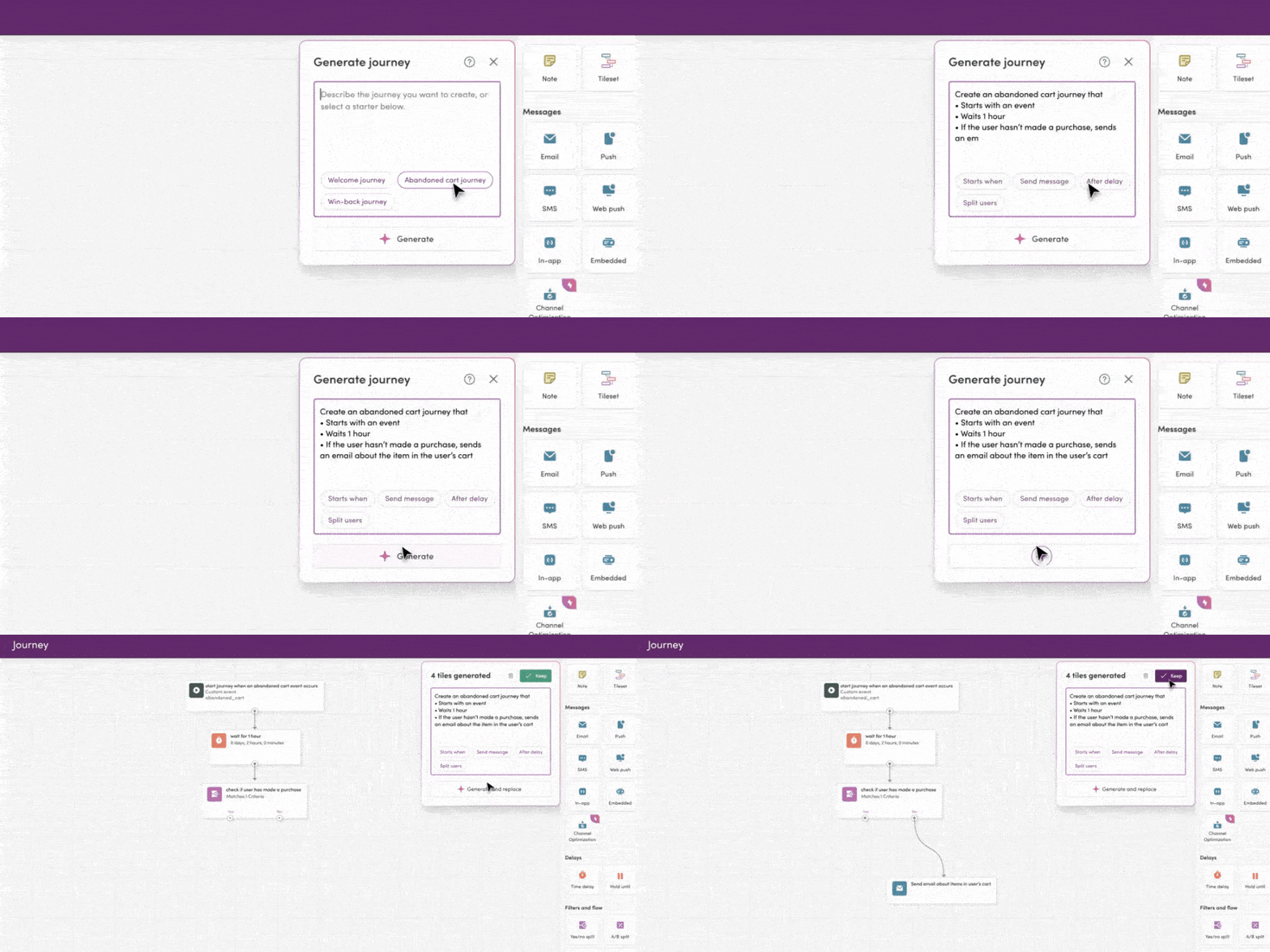
“The most effective journeys are the ones your customer doesn’t notice — because they feel natural.”
— Jeanette Woodburn, Iterable
If your journey map looks like a complicated flowchart, it might be time for a rethink.
- 🎥 Watch the replay
- 📖 Read the recap →
Step 3: Scale Contextual Personalization with Modular Content
Content shouldn’t be the bottleneck.
Even with great data and smart journeys, personalization breaks if content can’t keep up.
Movable Ink reframed it perfectly:
“A strong content system is like a wardrobe — the right pieces make personalization effortless and scalable.”
— Betty Rangel, Movable Ink
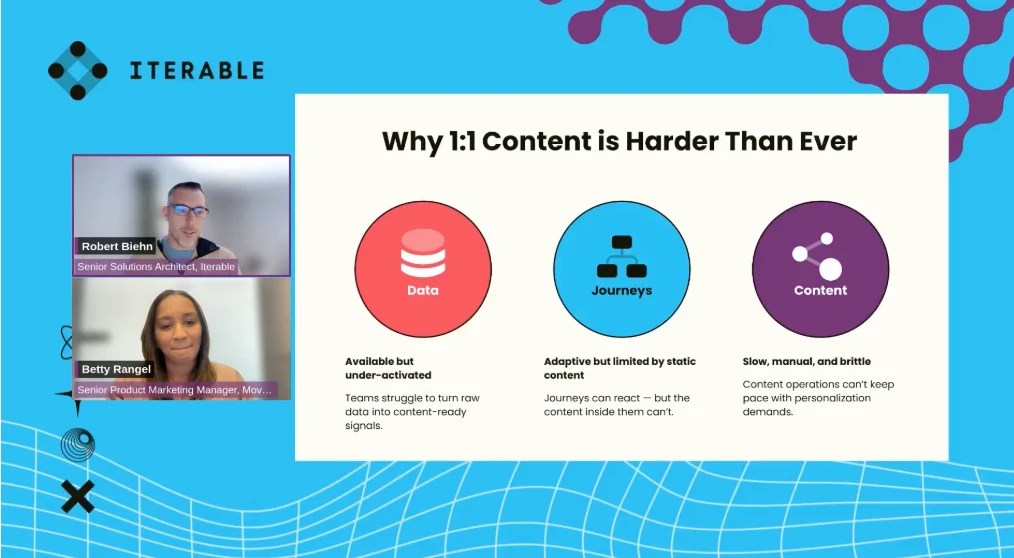
Modular content isn’t a creative shortcut. It’s how personalization scales without burning out your team.
- 🎥 Watch the replay
- 📖 Read the recap →
Step 4: Put AI to Work with Human-Led Expertise
AI should accelerate good judgment — not replace it.
This session cut through the hype.
Shweta Puri from Nextdoor emphasized that AI works best when it’s embedded, assistive, and human-led.
“Instead of asking what emails are we sending next, we’ll ask what outcome do we want?”
— Shweta Puri, Nextdoor

That shift in thinking changes everything.
AI isn’t about sending more. It’s about deciding smarter.
- 🎥 Watch the replay
- 📖 Read the recap →
Step 5: Turn Strategy into Revenue-Critical Action
Strategy doesn’t matter if it dies in a spreadsheet.
Zwift, Amplitude, and Iterable brought it home with one theme: execution over theory.
“Execution isn’t about perfection. It’s about launching the right moments fast and iterating while they still matter.”
— Rachel Kamel, Zwift 🚲
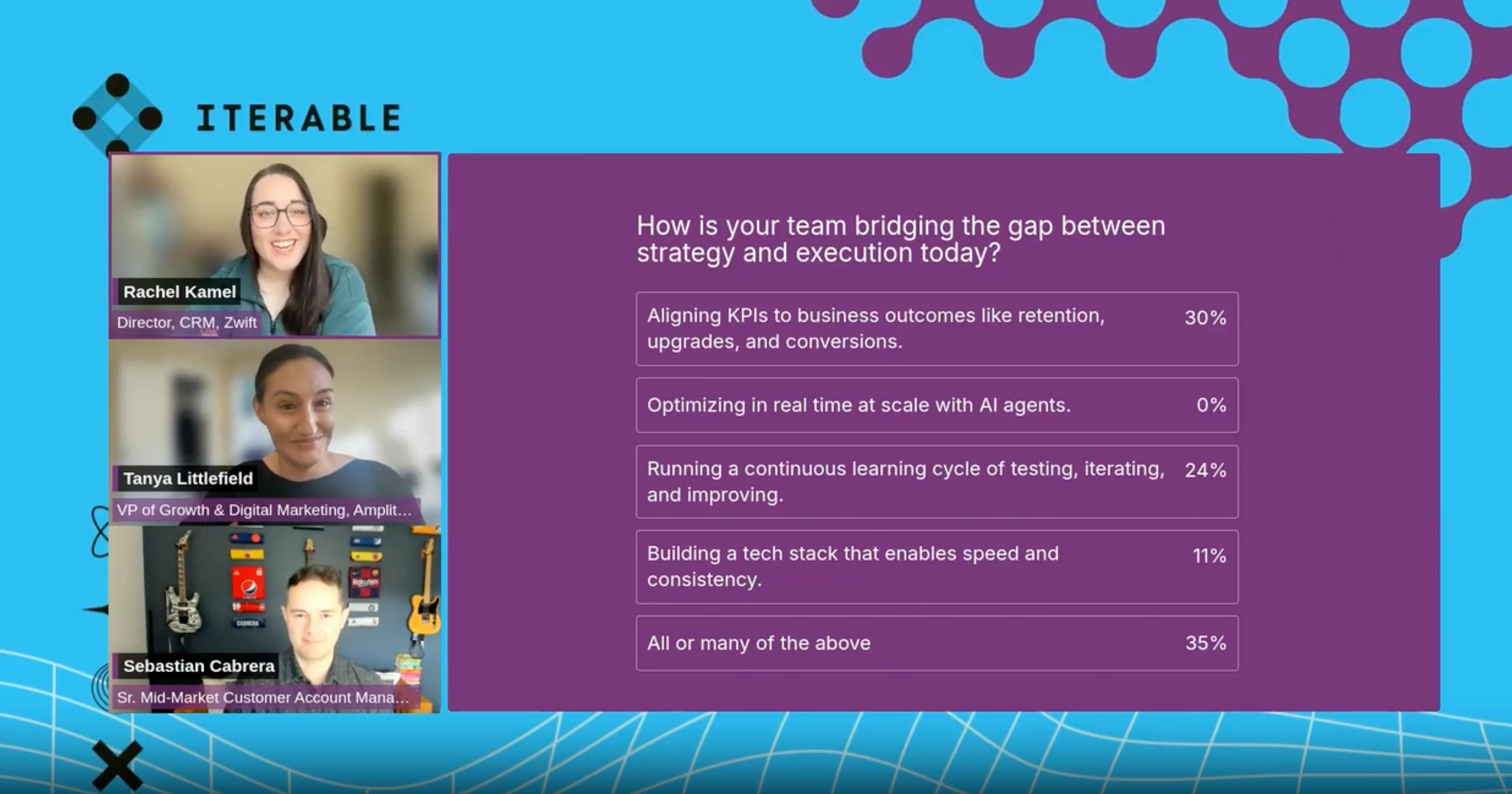
Moments-Based Marketing isn’t a framework you admire.
It’s a system you operationalize.
- 🎥 Watch the replay
- 📖 Read the recap →
The Bigger Shift
Across all five conversations, one pattern was clear:
This isn’t about sending better campaigns. It’s about building better systems.
Systems where:
- Data moves in real time
- Journeys adapt automatically
- Content flexes without friction
- AI supports decision-making
- Revenue guides prioritization
That’s the shift.